The Anthropic IPO disclosure document, the S-1 as it’s known, is out, and guess what? The investment landscape and the AI story are no clearer. If you were a bull prior to the release, there’s enough revenue growth and “TAM” talk here to get you excited. If you were a bear prior, there’s enough convoluted compute arrangements to make you double down on your previously held beliefs.
At the end of the day, the Anthropic (ANT) IPO is a call option on a wild future. Know how and where you are exposed. It’s not obvious.
So, why does this IPO even matter?
The success of Anthropic, as a going concern and a public company, will be consequential to both the US economy and the stock market. It’s as if we want the IPO to go well because the entire tech ecosystem is built around the deployment of AI infrastructure. Everyone wants to see their investment accounts go higher. But it can’t go too well because that likely means big disruption for knowledge worker employment. Seems like a weird needle to thread.
Ok, it sounds important… Should I read the Anthropic S-1?
Probably not; read a credible breakdown of the S-1. Half the internet has dug through it. Ironically, they probably asked Claude to analyze it. But the S-1 and many financial documents have turned into a circus. I reference the NYU professor, the “Dean of Valuation,” Aswath Damodaran’s 2021 blog post “Disclosure Dilemma: When more (data) leads to less (information)!”
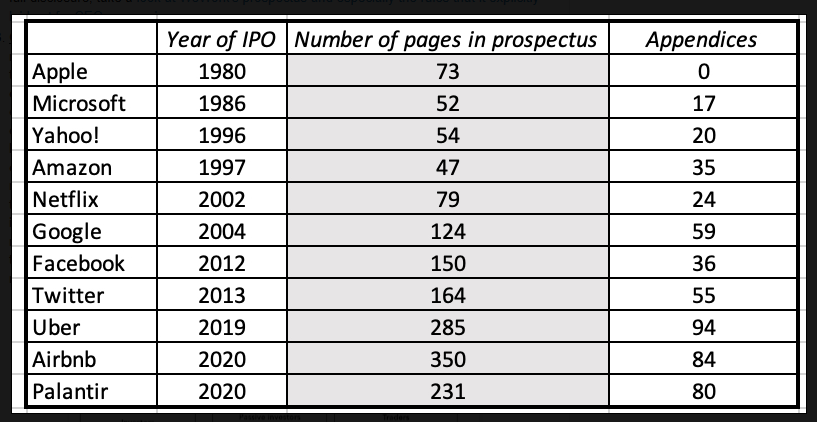
Prof. Damodaran points out the size of the S-1 has grown substantially: Apple IPO'd in 1980 with a 73-page prospectus, Palantir in 2020 at 231 pages, and now Anthropic at 416 pages. The size doesn’t increase clarity, however. He makes three key points: filings have gotten longer but less informative, they use language that is difficult to understand, and they use creative accounting to improve the optics on company profitability.
So what’s Anthropic worth?
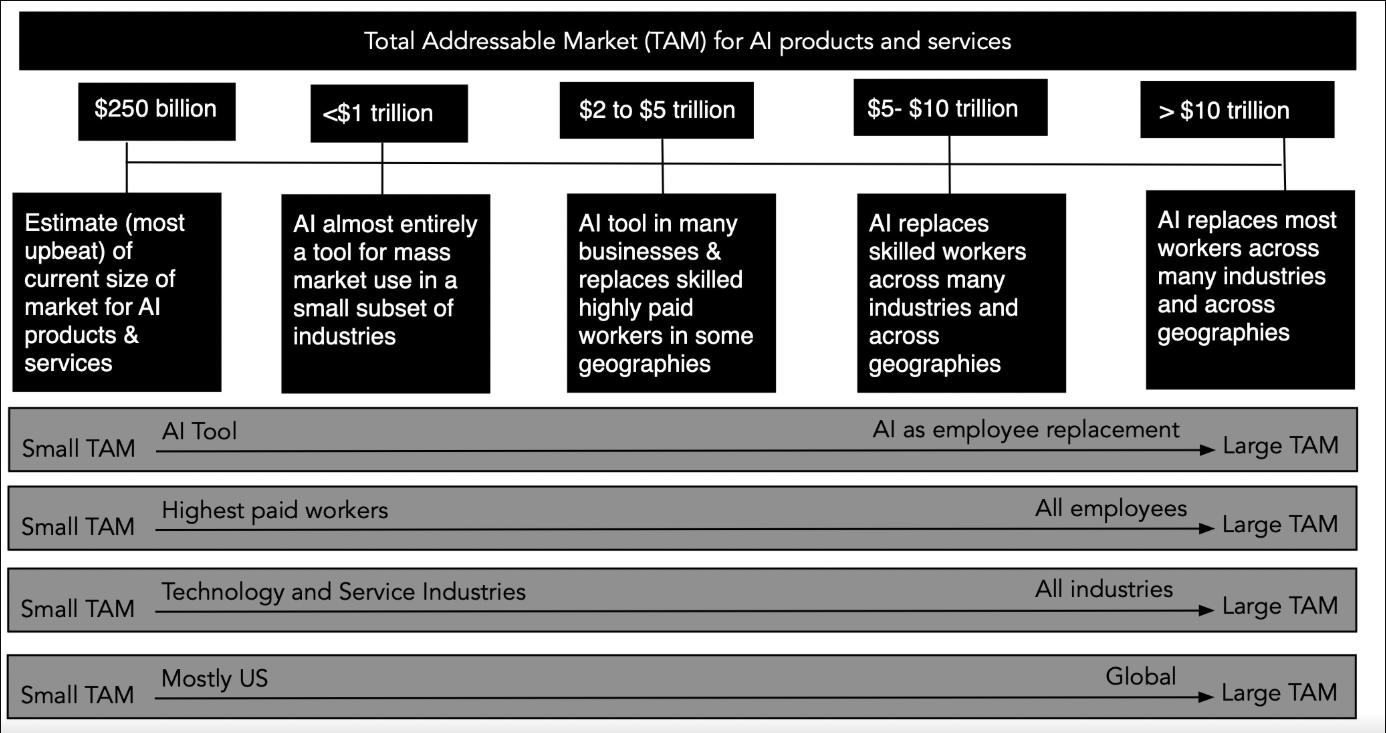
I don’t know. The professor takes a stab at it, and in my opinion, it’s the most credible valuation breakdown that’s available (2). He points to a $1.5 trillion valuation. I caution (and I think he does a good job speaking to this) that there are too many assumptions required. Most critically, what is the Total Addressable Market, and how much share does ANT ultimately claim? Prof thinks ANT can reach $1 trillion in revenue in 10 years. As he states, “These are my views, and yours may be very different.”
And my views are different. I think model development is happening too fast at numerous companies to make strongly held revenue claims. In my opinion, you need a strongly held revenue claim to support a buy decision on opening day.
What is most scary about the IPO?
The TAM. The SEC heavily scrutinizes projections, so most companies have moved to Total Addressable Market instead. SpaceX listed its TAM at $28.5 trillion. Anthropic points to $40 trillion. You can stretch TAM to cover what you want; by that logic, the TAM for my advisory business is $52 trillion, the value of US corporate stock held by American households.
Prof’s own estimate is more grounded, at $5 trillion or more, and it’s still the scary part. It rests on the “AI replaces skilled workers across many industries and geographies” category.
That is the biggest nightmare scenario. ANT’s success, and the AI industry’s, at large require massive disruption to workers and existing industries.
But what about right now?
The massive revenue growth in Q1 and Q2 has largely been attributed to the “token maxxing” phenomenon, companies driving AI adoption without guardrails. The spending bills came due and companies have placed better controls. This moderation is largely expected to have slowed growth in Q3. There are some estimates out, but nothing official. I think we’ll have to wait for an official update from ANT to draw a better conclusion.
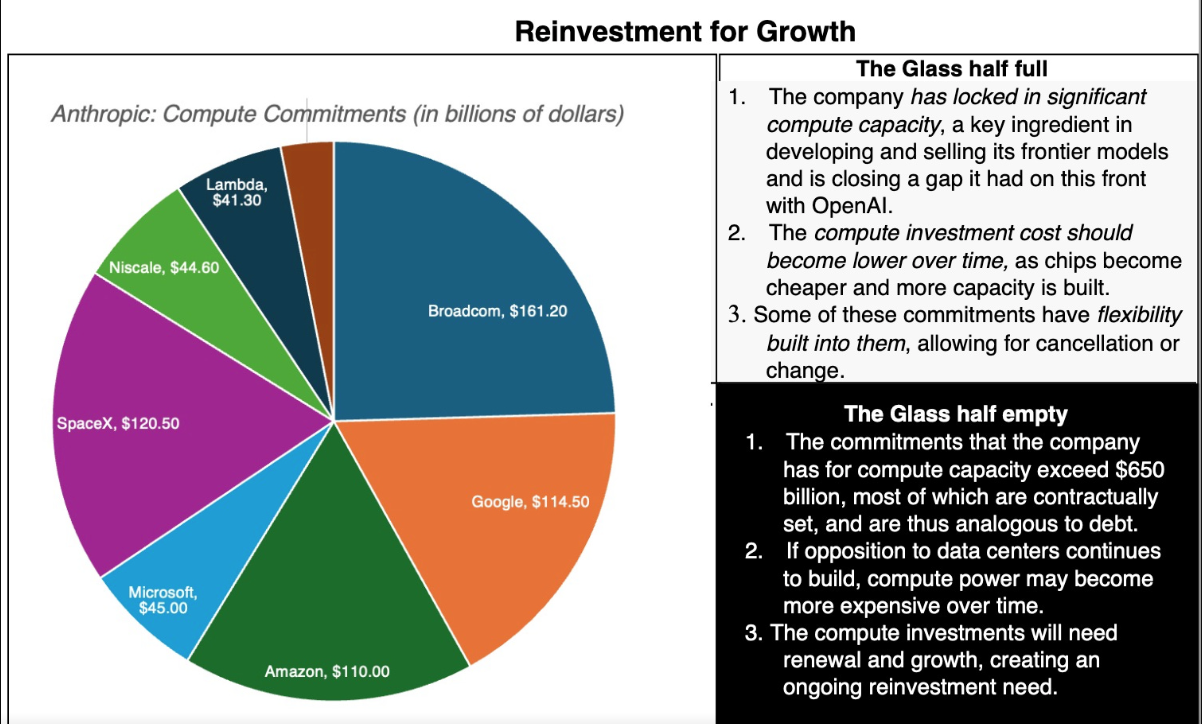
The compute commitments involved are huge. $600 billion huge. Again the chart below, Per Prof, if you are a bull or a bear you can draw your conclusion. I find point 1 of glass half empty to be most concerning, “analogous to debt.”
So what, this is why I only invest in the S&P 500 index?
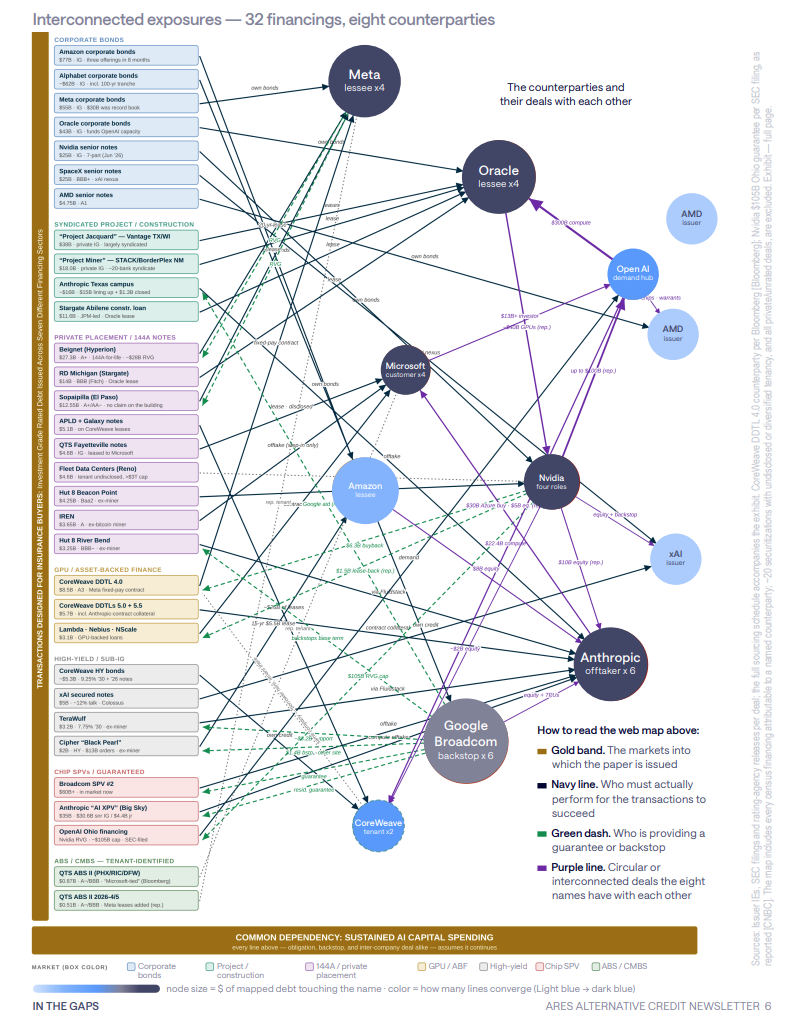
Many of the top market constituents are all connected via a spider web of arrangements. As private asset manager Ares puts it:
“Nvidia has reportedly committed up to $100 billion to OpenAI, which is buying $300 billion of compute from Oracle, all of it generated on Nvidia’s chips: a closed triangle. Microsoft is OpenAI’s largest investor and, reportedly, Anthropic’s newest landlord. Amazon holds billions of Anthropic while supplying compute to OpenAI. So the eight counterparties are highly interdependent. Stress can easily propagate.”
The index does not take you out of the web; it places you smack in the center of it.
So what do I do about it?
When I wrote about the SpaceX IPO, I framed it the same way: a call option on a very wild future. Disruptive technology is the heart of the US equity markets; it always has been. What’s is different today is the size of these IPOs, how much of the juice VCs have already squeezed, and how interconnected ANT is to key S&P 500 constituents.
My biggest concern with ANT is that interconnection. SpaceX had other businesses to lean on; ANT sits in the middle of the web. Simply putting blinders on is not sufficient. Risk management is paramount, and where you stand in your investor life cycle is a key variable; here’s where I’d start:
Know what you already own. I consistently see prospective clients with crazy amounts of technology exposure. S&P 500 + Nasdaq 100 + XLK (tech sector ETF) all overlapping tech exposure.
Diversify by more than sector or region. I look at underlying business models and the connectedness to the AI investment cycle.
Check your bond funds. As I wrote in “The Bully Bond Market,” debt from the AI build-out was showing up in core bond indices. Your safe money is taking more credit risk.
I encourage you to reach out if you need some help.
1.https://aswathdamodaran.blogspot.com/2021/07/disclosure-dilemma-when-more-data-leads.html